
We may earn a commission from links on this page, at no extra cost to you. Here’s how we test. See our affiliate disclosure.
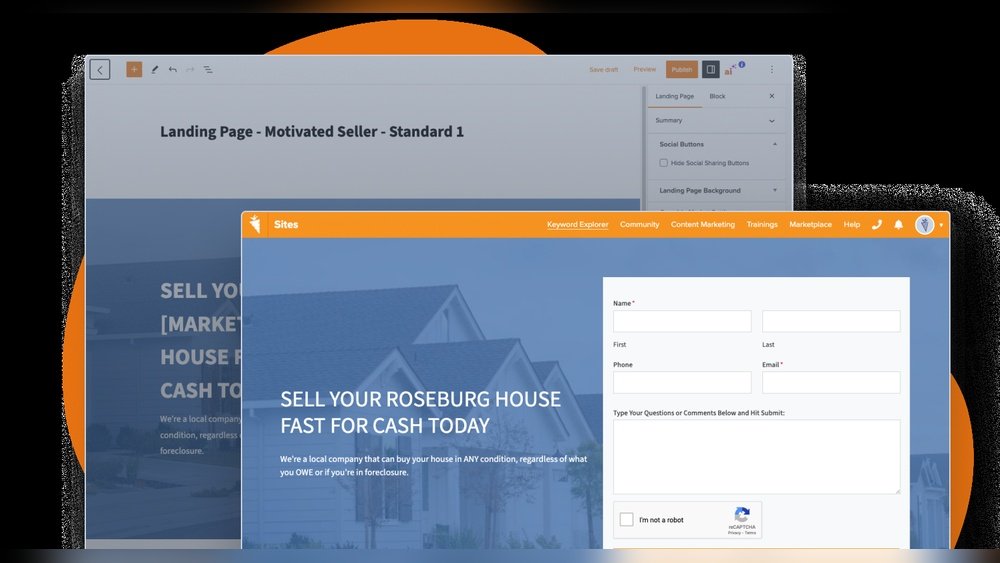
The best landing pages for motivated sellers are simple, single-goal pages that promise a fast, no-obligation cash offer and ask for only a property address and phone number. For real estate investors and wholesalers, the strongest performers in 2026 are Carrot (purpose-built for motivated-seller lead gen and SEO), Leadpages (cheapest fast-launch option), Unbounce (best for paid-ad traffic), and ClickFunnels (best when you want a full multi-step funnel). A high-converting seller page loads in under two seconds on mobile, leads with one benefit-driven headline (“Sell Your House Fast — Any Condition”), keeps the form to two or three fields, and adds trust signals like a photo, a short testimonial, and a privacy line. Below we break down the traits that matter, the tools that build them, and a clear pick for each situation so you can launch a page that actually captures seller leads.
Best landing page tools for motivated sellers at a glance
Every tool below can build a seller page, but they win at different things. Here’s the quick verdict before the details.
| Tool | Best for | Starting price* | Why it wins |
|---|---|---|---|
| Carrot ✅ Best overall | Investors & wholesalers | ~$99/mo | Templates + built-in SEO made specifically for motivated-seller lead gen |
| Leadpages | Budget / fast launch | ~$49/mo | Cheapest way to publish a clean page with A/B testing |
| Unbounce | Paid ads (PPC) | ~$99/mo | Smart Traffic auto-routes visitors to the best variant |
| ClickFunnels | Full multi-step funnels | ~$97/mo | Upsells, follow-up, and CRM built in for a complete deal pipeline |
*Directional pricing — always confirm current plans on the vendor’s page before buying.
New to page building? Start with our tested ranking of the top 10 landing page builders for 2026, then come back here for the seller-specific angle.
Key traits of high-converting seller pages
The best motivated-seller pages all share the same DNA: one goal, zero distractions, and instant clarity on “what’s in it for me.”
Simplicity and focus
Keep the design clean and single-purpose. Limit distractions with minimal text and one clear offer that speaks to the seller’s main concern — a fast, hassle-free sale. A cluttered page confuses visitors and kills conversions.
A clear value proposition
State the benefit in the headline: fast close, cash offer, any condition, no fees. Sellers should see the payoff in under three seconds. A strong value proposition is the single biggest lever on conversion rate.
Mobile-first design
Most motivated sellers arrive from a phone — often from a Facebook ad or a Google search made in a moment of urgency. The page must load fast, use large tap-friendly buttons, and keep the form visible without pinch-zooming.
Essential elements every seller page needs
If your page is missing any of these four blocks, you’re leaving leads on the table.
A compelling hero section
The hero is the first thing sellers see. Lead with a benefit-driven headline (“Sell Your House Fast — Any Condition, Any Situation”), a one-line subhead, and a form or button right there above the fold.
Concise bullet points
Three to five bullets covering the seller’s biggest worries: no repairs, no agent fees, close on your timeline, fair cash offer. Short and scannable beats long paragraphs every time.
A strong call to action
Use action-driven button text like “Get My Cash Offer” or “See What My House Is Worth.” Make it high-contrast, place it above the fold, and repeat it at the bottom of the page.
A short lead-capture form
Ask for the property address and a phone number — that’s it. Every extra field lowers completion. Add a privacy line and a testimonial near the form to reduce friction.
The tools that build them — and who each is for
The four builders below cover every budget and traffic source. Here’s the honest breakdown.
Carrot — best overall for investors
Pros: Built specifically for real estate investors, with pre-tested motivated-seller templates and genuinely strong built-in SEO (Carrot pages are designed to rank for “sell my house fast [city]”). Lead management and follow-up are included.
Cons: Pricier than a generic builder, and the design flexibility is narrower than Unbounce.
Verdict: If motivated-seller lead gen is your core business, this is the closest thing to a done-for-you system.
Leadpages — best budget pick
Pros: The cheapest way to publish a clean, fast page, with built-in A/B testing and a large template library.
Cons: Not real-estate-specific — you build the seller angle yourself. Fewer advanced targeting features.
Verdict: Ideal when you’re testing the waters and want a professional page live today without a big monthly bill.
Unbounce — best for paid ads
Pros: Its Smart Traffic feature automatically sends each visitor to the variant most likely to convert them — a real edge when you’re paying per click. Deep A/B testing and dynamic text replacement for ad-to-page match.
Cons: Overkill (and pricier) if you rely mostly on organic or direct-mail traffic. For the full comparison, read Leadpages vs Unbounce for PPC.
Verdict: The pick if Facebook and Google Ads drive most of your seller leads.
ClickFunnels — best for full funnels
Pros: Goes beyond a single page — multi-step funnels, follow-up automation, and a built-in CRM to nurture sellers who don’t convert on day one.
Cons: More than most investors need for a simple opt-in page, with a steeper learning curve. See how it stacks up in ClickFunnels vs Chime for realtors.
Verdict: Choose it when you want the whole pipeline — page, follow-up, and offers — in one place.
Landing page strategies to boost seller leads
The tool is only half the battle. These three tactics separate a page that trickles leads from one that floods your pipeline.
Short vs. long pages
Short pages win for simple cash-offer opt-ins — one benefit, one form, fast decision. Longer pages (testimonials, FAQs, a “how it works” section) build the extra trust needed for higher-value or hesitant sellers. Match the length to how much convincing your offer needs.
Testing and optimization
Test one element at a time — headline, button color, form length — with A/B testing built into Leadpages, Unbounce, or ClickFunnels. Small, steady changes compound into meaningful conversion gains over a few weeks.
Using AI for lead generation
AI chatbots can qualify and capture seller details 24/7, and AI copy tools help you spin up location-specific headline variants fast. Used well, they raise both lead volume and lead quality without extra staff.
Examples of pages that convert
Three formats consistently outperform for motivated-seller campaigns.
Home valuation pages
Offer an instant estimate in exchange for an address. Sellers get immediate value, you get a qualified lead — it’s the highest-intent format for listing-minded owners.
Simple one-page opt-ins
A single headline, three bullets, and a two-field form. Fast to load, easy to decide, and the workhorse of most investor campaigns.
Quiz and calculator layouts
Interactive elements pull hesitant sellers deeper before asking for contact info, which can lift both engagement and lead quality for higher-value deals.
The verdict: which should you choose?
For most real estate investors and wholesalers, Carrot is the best overall choice because its templates and SEO are purpose-built for motivated-seller lead gen — you’re not bending a generic tool to fit. Choose Leadpages if you want the cheapest fast launch, Unbounce if paid ads drive your traffic, and ClickFunnels if you want a full multi-step pipeline rather than a single page. Whichever you pick, the winning formula stays the same: one benefit-led headline, a two-field form, mobile-first speed, and a visible trust signal. If you also sell to homeowners and agents, pair this with our roundup of the best software for real estate agents in 2026.
Frequently Asked Questions
What makes a landing page ideal for motivated sellers?
An ideal seller page is simple, single-goal, and mobile-first. It leads with one benefit-driven headline (a fast cash offer, any condition), asks for only an address and phone number, and loads in under two seconds. Trust signals — a photo, a short testimonial, and a privacy line near the form — plus a high-contrast call to action are what push a curious visitor to actually submit their details.
Which tool is best for building motivated-seller landing pages?
For real estate investors, Carrot is the best overall because its templates and SEO are built specifically for motivated-seller lead generation. Leadpages is the cheapest fast-launch option, Unbounce is strongest for paid-ad traffic thanks to Smart Traffic, and ClickFunnels wins when you want a full multi-step funnel with follow-up. Match the tool to your main traffic source and budget rather than defaulting to the most popular name.
How many form fields should a seller page have?
Keep it to two or three: property address, phone number, and optionally a name or email. Every extra field measurably lowers completion rate. Motivated sellers are often acting in a hurry, so friction is your enemy. You can always gather more detail on the follow-up call — the job of the page is simply to capture a qualified lead, not the full story.
How important is mobile optimization for seller pages?
Critical. The majority of motivated sellers arrive from a phone, frequently via a Facebook ad or an urgent Google search. A slow or hard-to-tap page loses them instantly. Prioritize a sub-two-second load, large buttons, readable fonts, and a form that’s visible without zooming. A responsive, fast page can be the single biggest driver of your overall lead volume.
Related guides
- Best Sales Funnel Builders for 2026 (Tested & Ranked)
- Top 10 Landing Page Builders for 2026
- ClickFunnels vs Chime (Lofty) for Realtors
- Browse all sales funnel guides
External references: Unbounce landing-page resources and Carrot’s investor platform. Reviewed by Manik Chandra Dhor. Last updated 2026.